

Victory at sea, “438 Days”
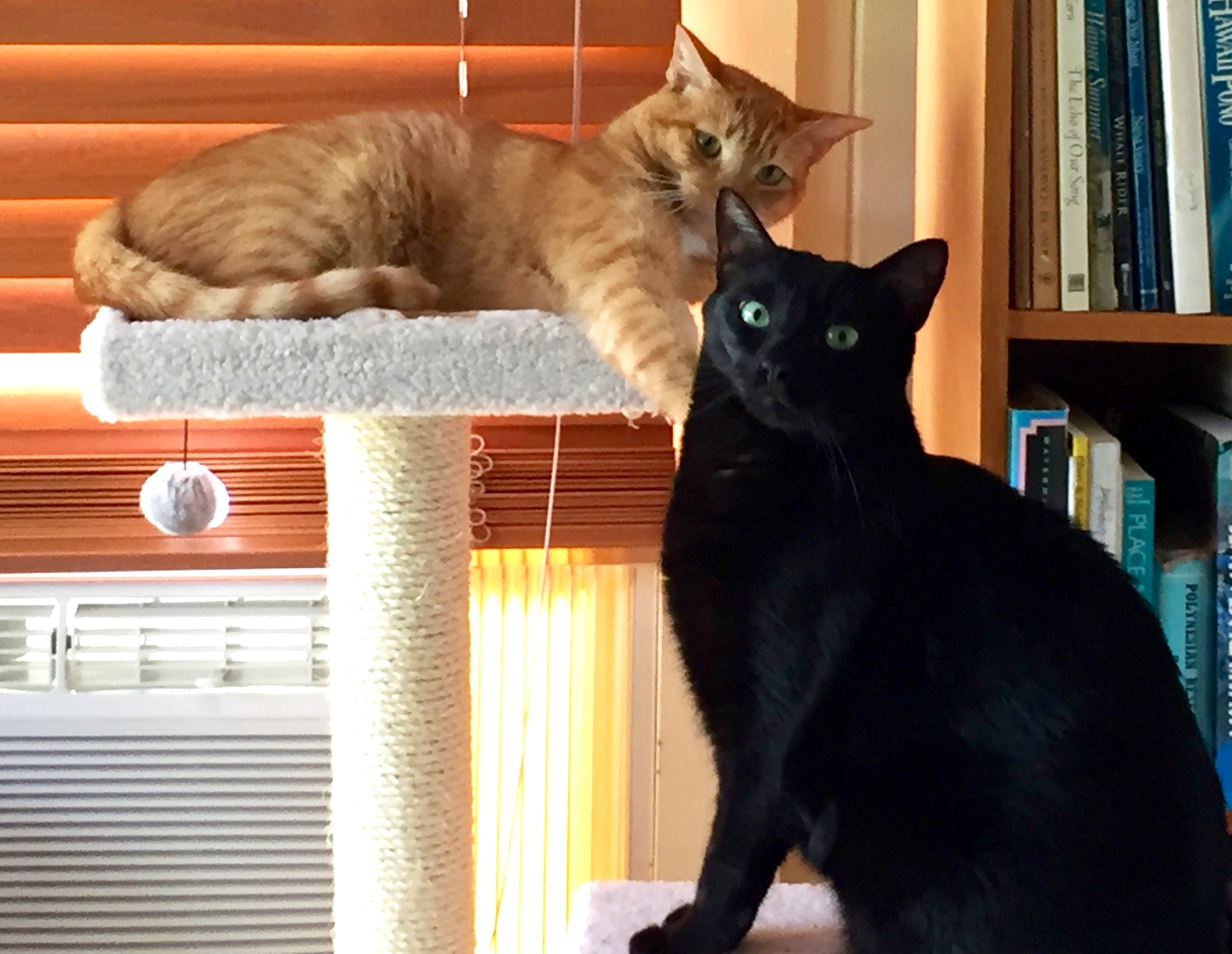
I started this site in 2010 to fulfill a new year’s resolution I made to do at least three creative things that year. I started a window box vegetable garden and got my first kitten, which I counted as my other two most notable creative ventures for the year. Six years later, I still have a window box garden – kind of, although I’ve discovered it’s more efficient to shop at farmers’ markets. I don’t have the same kitty cat but I do have two others who are now two and three years old. And finally, I still have this website, which, despite not posting very many blogs over the years, I decided is worth keeping. I still like this format that allows for writing longer observations and thoughts.
I recently finished reading 438 Days, by Jonathan Franklin, a story that made worldwide headlines about a Venezuelan fisherman who survived 438 days floating across the Pacific Ocean from Mexico to the Marshall Islands. As well as being drawn to stories that involve the ocean (usually survival at sea), I am also inspired by what the human spirit can endure and the amazing things it can accomplish.
For spending over a year and two months on the open ocean in a small open boat with not much else to do beside go crazy, this is a story full of drama that never gets boring. The outboard motor had broken, there were no oars, no sail. Pretty much everything that may have been helpful to either propel the boat or be used for survival had washed overboard in the violent storm that prevented rescue after what was to be an overnight routine fishing trip. The open boat was fisherman Salvador Alvarenga’s only protection from the roller coaster of drought conditions and blazing heat to violent storms with winds and huge waves that amazingly never capsized or swamped the boat. Predators smelling food constantly lurked nearby, often bumping the boat in the hope of tipping its human cargo overboard. Alvarenga sometimes had to resort to eating fingernails and his hair to stay alive.
Alvarenga was clearly a very special guy. Even though his life up to that point had been nothing remarkable – a “party boy”, as he calls himself, he had the inner strength, the smarts, and above all, the will to survive when he seemed past the point of hope that he would ever be found.
It was fascinating reading about how the currents carried him across the sea, how the eddies turned him in large circles while providing an abundance of food, how not moving at all in the doldrums became so mentally debilitating. The thought of suicide became an attractive option when food would become scarce and loneliness became overwhelmingly unbearable. Alvarenga discovered God while at sea, in part from his fiercely religious companion who didn’t have enough will to survive. It is hard to imagine how Alvarenga could have endured these 438 days, and I had to keep reminding myself that lived to tell about it so he obviously got through it.
His belief in God became a primary motivating force for Alvarenga to survive. In this way, his story is not unlike others in which belief in a higher power saved them from seemingly impossible predicaments where survival seemed to be neither desirable nor even possible. Who would have guessed that the life of a Venezuelan fisherman living in Mexico would become so significant?
Alvarenga says at the end of the book that much as he didn’t like having to relive his time at sea in order to tell his story, he was compelled to tell it. He does not consider himself a hero, rather his motive was to inspire others who are in situations where they have lost hope. Inspiration can come from many sources, and this is certainly one of them. Mahalo for that.


My purpose for wanting to sail on this small double hulled canoe was to gain insights into the lives of my seafaring ancestors. Pollution has certainly destroyed much of the land and even the shoreline over the years, but out in the deep blue sea, I’m pretty sure that not much has changed, at least relative to non-instrument sailing. Currents, winds and stars continue to provide accurate clues for navigation. I wanted to feel what it may have been like for the Polynesians who traveled from the Marquesas to Hawaiʻi in ancient times. Some archaeologists believe settlers arrived as the third century, long before the migration voyages from Tahiti in the 1300s.
It was home to at least 200 residents since the 1200s, if not earlier. The Nā Pali Coast ʻOhana, a group of Kauaʻi residents who saw the need many years ago to protect the ancient sites of the Nā Pali coast that were being degraded, manages the area, sending in crews at least twice a year, who do clean up, maintenance, archaeological mapping and restoration. Although there is fresh water from a spring, the tour boat companies who have permits to land on Nuʻalolo Kai bring in water and ice in every day for the camper-volunteers. There were 12 of us on this particular clean up trip. Most of the people were regulars, so everyone knew each other, and this being Hawaiʻi, chances of my knowing someone were reasonable, and as it turns out, I knew the group leader, Sabra Kauka.
Equally special, which I havenʻt experienced in awhile, was being outside the radius of cell phones and internet, and, for that matter, anything needing electricity. I didnʻt miss my phone, email, wine, and when a Sunday paper was delivered along with our fresh supply of ice and water, I couldn’t even bring myself to look at it. Being removed from the constant bombardment of news, time becomes irrelevant, as does what’s happening in the rest of the world. I enjoyed the company of the people I was with, spending time with each person to discover our commonalities and enrich each other with the stories we had to share about ourselves and our experiences. It was a rare opportunity to step outside the relentless pace that drives our daily lives and to remember that contentment doesn’t always come in the material things we acquire, it comes just as much in our ability to connect with the gifts of nature – the gift of snorkeling, the gift of simple yet delicious food, the gift of friendship. Mahalo e ke akua for your many, many gifts.


During that period between 1987 and the time I returned home again in 1992, to work on his Honolulu staff before branching out on my own, the committee passed significant legislation that directly benefitted Native Hawaiians. The Native Hawaiian Education Act, The Native Hawaiian Health Care Act, The Native Hawaiian Revolving Loan Act, the Native Languages Act and the Native American Graves and Repatriation Act were among the significant bills that I staffed during this time, each one of them the law of the land today. At the markup of the Native Languages Act legislation in his committee, I was staff for the bill and was about to respond to Senator Slade Gorton’s criticism of perpetuating Native American languages when Senator Inouye, who was chairing the committee took control and responded. He gave the most eloquent and extemporaneous speech I have ever heard. Sitting in awe, I listened to him undress Senator Gorton, first his clothes, which he piled up neatly, then his skin, then he took his bones apart and laid them in a precise little pile. There was nothing left of Senator Gorton, and while he still didn’t vote in favor of the bill, it passed overwhelmingly by the rest of the committee. It was moments like this that I will never forget. He was one of the smartest men I have ever known, even when he lectured me one day, as I sat with my arms and legs crossed, refusing to look at him, about why the military needed Kahoʻolawe for target practice. He changed his position later (not because of me) and was instrumental in returning the island to the Hawaiian community.